
Home / First payment
The first payment, and the three clocks it winds up
Item price plus domestic courier, settled once. From that moment three timers run back to back: review, seller dispatch, and the road to the warehouse.
Clock one: review, 3-5 working hours
Paying does not buy anything yet. Staff first review the order: link alive, price current, stock real. The tutorial quotes 3-5 working hours for this, and the unit is working hours, not wall-clock hours. An order submitted at midnight warehouse time waits for the morning shift before its window even opens.
Review is where problems surface cheaply. A dead link, a price hike, an out-of-stock variant: each converts into a message to you rather than a wasted purchase. If you need the desk to jump the queue, the priority purchase add-on costs 5 yuan per commodity order and targets processing within 4 hours of the buyer's working time. One practical prerequisite: open the Kakobuy account first, because every clock on this page starts at a paid order, and paying needs a funded account.
The buyer-hours clock
The retained buyer-hours article lists 09:00–18:00 China time, Monday–Sunday for Taobao, Tmall, JD, Weidian, Yupoo and Xianyu. Other third-party platforms use Monday–Friday. These hours do not guarantee immediate review or seller dispatch.
Enter a local date and time to see the China-time equivalent and the next published desk window. This is an availability estimate, not a promised processing start; holidays and live queue conditions are not included.
Clock two: the seller decides to ship
Once review passes, the agent places and pays the seller order. Now the slowest, least controllable clock runs: the seller's own dispatch habit. The help centre quotes Taobao sellers at 3-7 days, excluding custom-made and pre-sale items; JD and Amazon self-operated listings go out the same purchase day, while their third-party sellers take 3-5 days.
Nothing on the order page distinguishes 'purchased an hour ago' from 'purchased, seller on holiday'. The status just reads Purchased. That is normal for the first few days; the stall guide covers when it stops being normal, and the choosing page shows how dispatch speed should steer which seller you pick in the first place.
| Seller type | Published dispatch time | Source |
|---|---|---|
| Taobao sellers | 3-7 days (custom and pre-sale excluded) | help centre, article 81 |
| JD / Amazon self-operated | the same purchase day | help centre, article 81 |
| JD / Amazon third-party sellers | 3-5 days | help centre, article 81 |
Clock three: the road to Xiamen
Shipped generally means the seller shipment has been reported. It does not prove the exact parcel location or every carrier handover. The retained help gives domestic transit examples of roughly one, three or seven working days by region, while the tutorial uses a broader three-to-five-day indication. Use actual tracking and ask about an exception rather than treating those figures as guaranteed deadlines.
Published geographic delivery ranges are only planning indications. A seller’s address and a priority purchase option cannot guarantee the arrival date. Check seller dispatch, the actual domestic tracking events and any holiday notice separately.
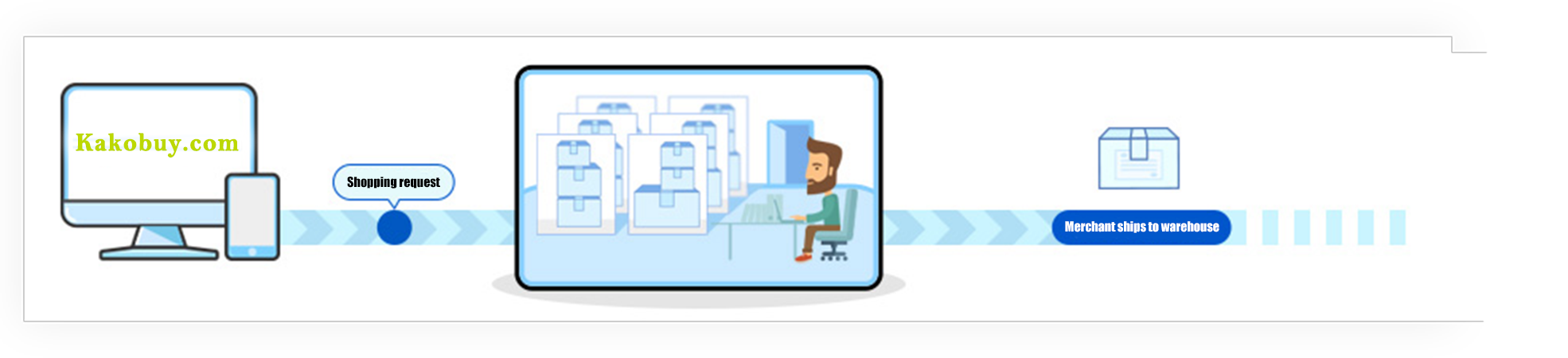
All three clocks end at the same doorstep: the warehouse signs for the box and the arrival sequence begins. Your money has now been split in two places: spent at the seller, waiting as measured freight-to-be.