
Home / Warehouse arrival
Arrival is a sequence, not a moment
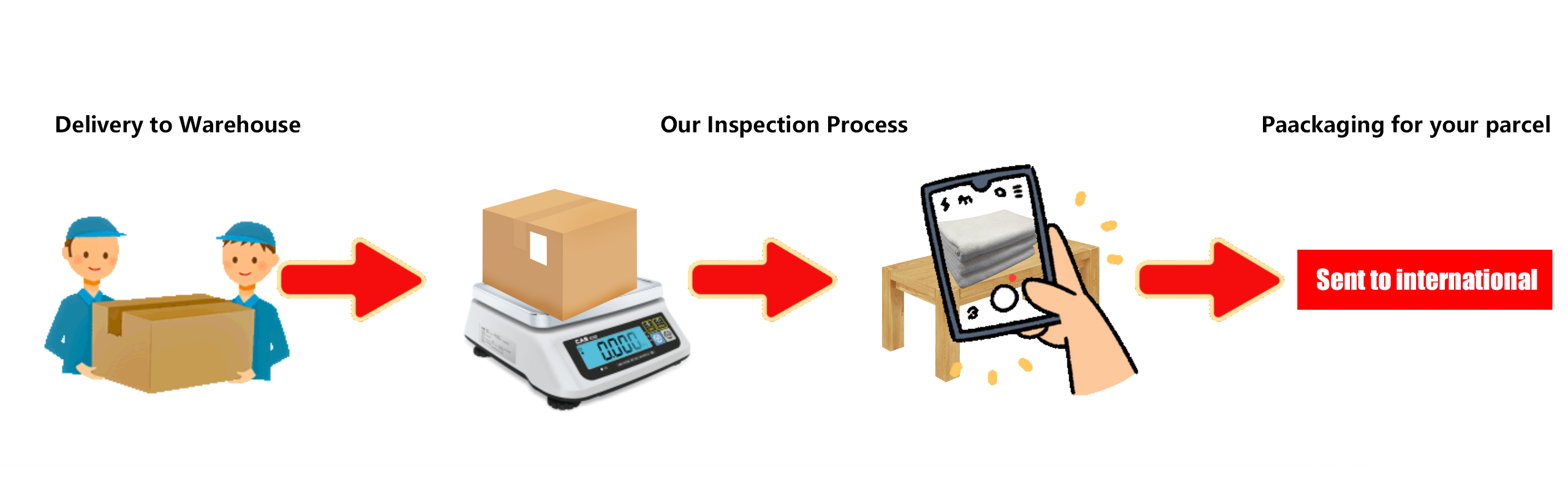
Sign, inspect, weigh, shelve. Four small steps separate a courier van from the status that finally lets you ship, and two of them produce numbers you will pay by.
Signing and inspection: what the bench actually checks
The warehouse signs for the parcel, and the published inspection covers appearance: model, style, size. Garments, bags, suitcases and shoes are opened; sealed retail packs are not, and for electronics the help centre says plainly that authenticity, function and quality are out of scope. Inspection and consolidation are free on this agent.
This page stops where inspection details begin, because arrival is a custody event here: the goods changed hands, a camera recorded their condition, and the evidence landed in your account. What to do with disappointing photos is a decision this site maps on the stall page; the fine print of photo add-ons lives in the official help centre.
Item measurements help plan the parcel
At the same bench the item is weighed and measured. The help centre is unusually direct about why: the weight and volume recorded at storage can differ from the final packed parcel, so the freight you eventually pay can differ from any estimate you saw. The official advice that follows is to keep an amount in your account balance so a shortfall does not strand the parcel at dispatch time.
Treat the stored weight as a draft. Consolidating several orders into one box, stripping shoe boxes, or adding protective packing at the waybill step all move the final figure. The second payment page carries that thread; stored-item measurements help planning; the packed parcel and selected billing rules determine the shipping charge.
On the shelf: three windows open at once
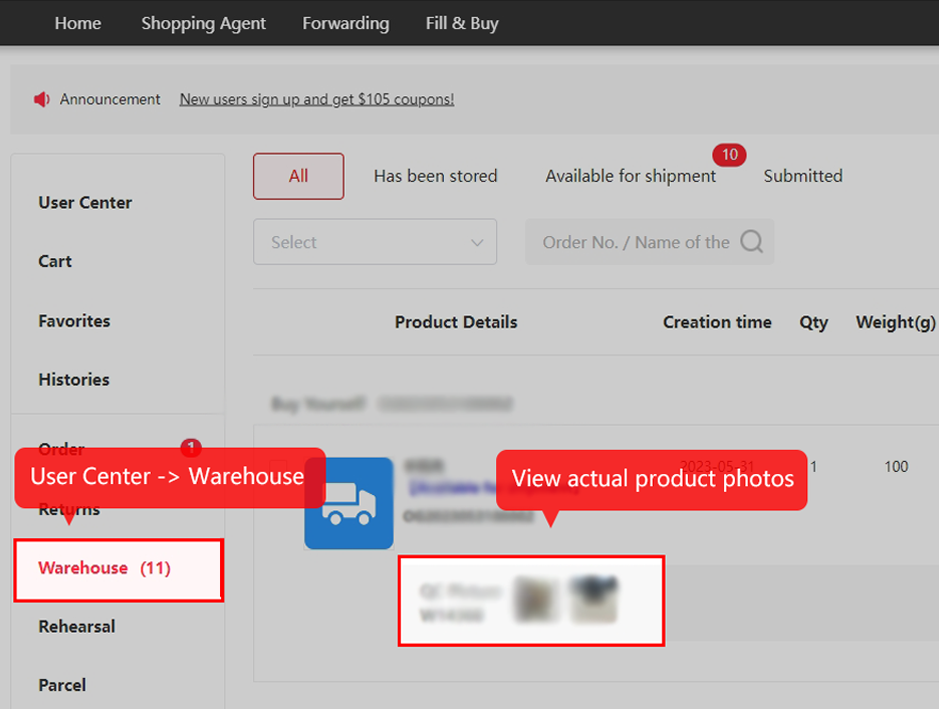
Warehouse steps open separate decisions and deadlines. Normal free storage is stated as 100 days from In storage, with a day-90 reminder. Abnormal unmatched packages use 60 days from Signed for. Eligible returns/exchanges use 120 hours from Stocked in; check the seller and item conditions. The sources do not establish that every interface label has the same timestamp, and amendments remain subject to approval and costs.
How to check the QC photos
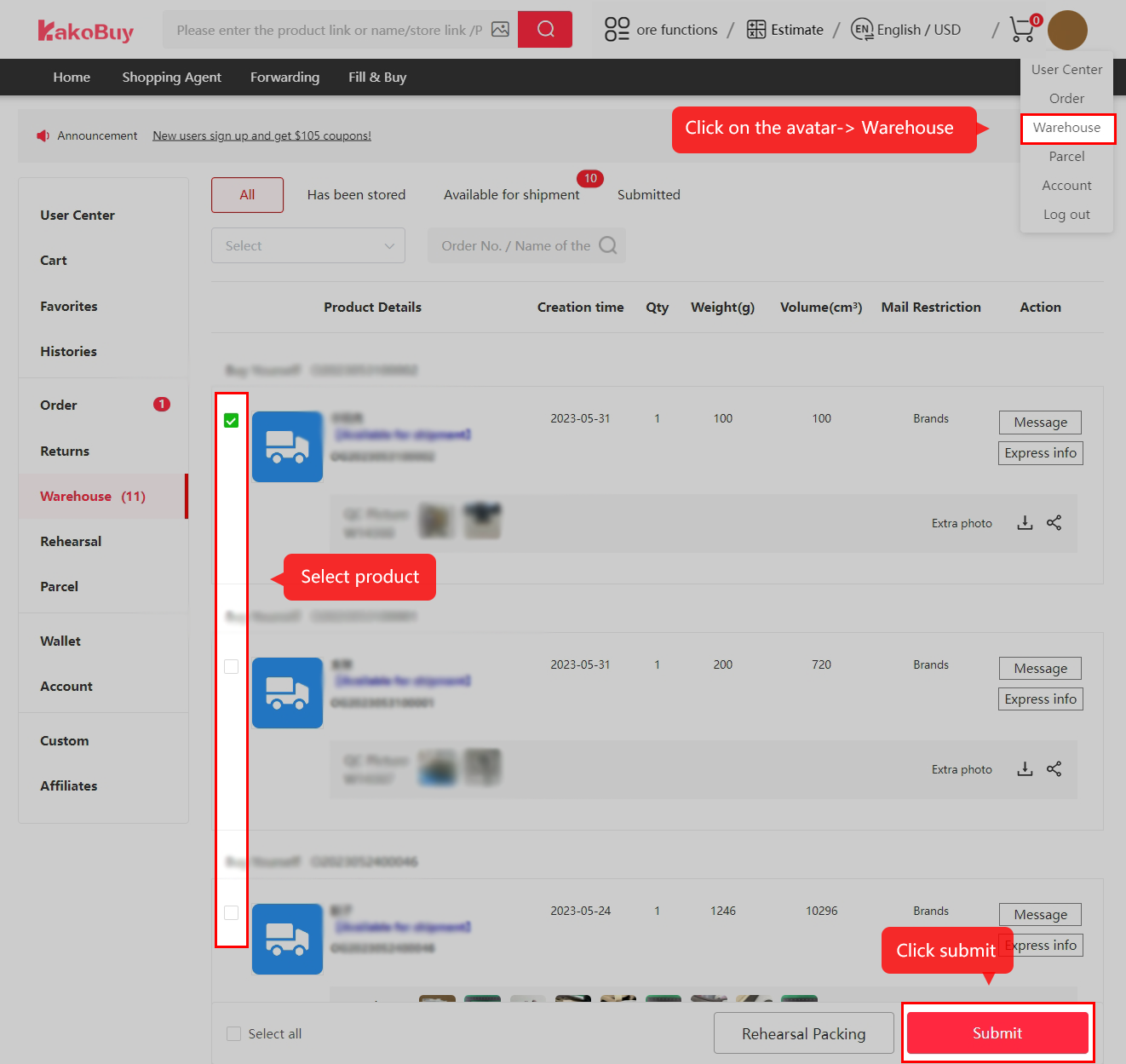
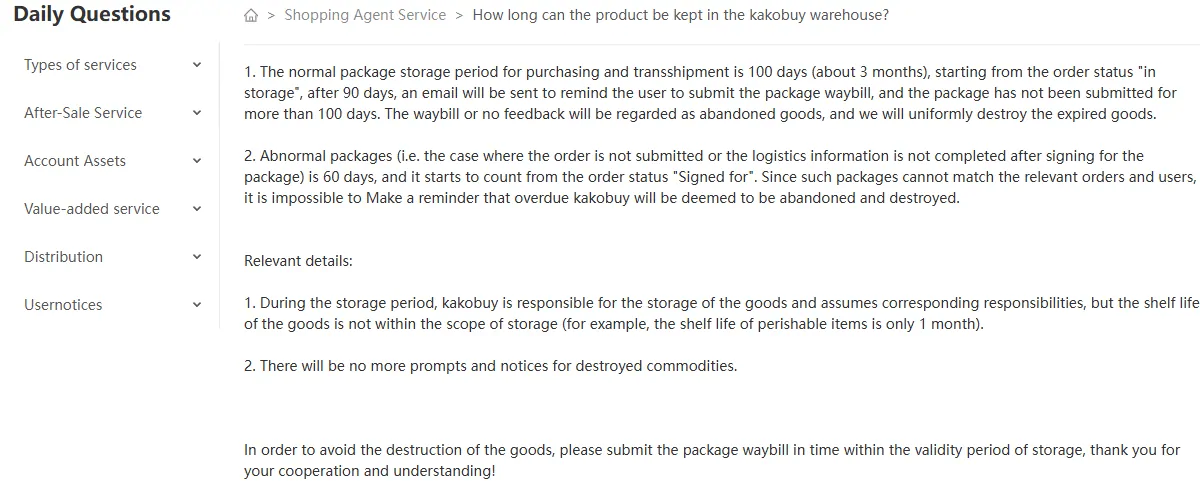
They live under User Center, Warehouse, next to each stored item. Read them in three passes: the overview shot against the listing photo for model and colourway, the detail shots for stitching and print edges, and the size tag against the measurements you ordered. The published inspection covers appearance only, so these photos cannot test function. Every later decision, shipping, returning, photographing again, reads better with the pictures open.
Arrival is complete enough for the next decision only when the relevant item record, QC and measurements are available. Check its actual storage and return deadlines; a courier’s Signed for event alone does not establish that every item has been matched and shelved.
Abnormal packages: arrival without an order
One arrival path skips the whole first-payment chain: a parcel reaches the warehouse with no matching order in the system. The storage article calls these abnormal packages, and they live under harsher terms. Their free window is 60 days instead of 100, and the clock starts at the 'Signed for' status, the moment the warehouse accepts the box, not at shelving. Past the window, the destruction rule is the same one that governs everything else on the shelf.
In practice this is a forwarding-service problem: it happens when a parcel from your own seller arrives before you have submitted its transfer details, so the system cannot tie the box to an account. The fix is procedural, not clever: create the transfer order before the parcel lands, and keep the courier tracking number where you can paste it. Do not assume a purchase order can never have an inbound matching problem. Keep the seller shipment number and ask support to match any unidentified package.
The practical reason to know the term at all: if support ever labels your box abnormal, the first number to check is the date it was signed for. Your window is 60 days from that stamp, and the day-90 reminder mail that softens the normal deadline does not exist on this track.
One order can arrive in more than one box
If the seller split the shipment, one delivered tracking number does not establish that the complete order arrived. Match each domestic tracking number to the expected items and quantities, then compare those with the warehouse rows and QC images. Ask the buyer whether another package is still in transit before treating a partial arrival as a warehouse loss.
For an unidentified arrival, send support the order or forwarding reference, seller shipment number, delivery date and the expected contents. A delivery screenshot helps locate the inbound record; it does not prove inspection is complete. Keep the original item counts and all shipment references together until the discrepancy is resolved.